


Philadelphia is a garden tote bag
Black / Large
$30.00 USD
Skip to product information


Philadelphia is a garden tote bag
$30.00 USD
Preserving Philadelphia's ecology in a can. Somewhere in between the cheesesteak and the soft pretzel is the real food of Philadelphia - a forgotten fruit that tastes exactly like mango custard.
Nobody thinks of Philly as tropical fruit country, but the largest fruit native to North America has ripened along these creek banks every September for thousands of years. Just business as usual in the tropical paradise of Pennsylvania.
Nobody thinks of Philly as tropical fruit country, but the largest fruit native to North America has ripened along these creek banks every September for thousands of years. Just business as usual in the tropical paradise of Pennsylvania.
Don't forget! 25% of profits from every sale of this design goes to Blue Sky Gardens, a teaching garden bringing fresh food and nutrition education to Philadelphia families.
Up to 75% of profits shared
25% of every sale of this piece goes to our partner community garden in the city it celebrates.
And 50% of our annual profits support even more gardens, plus the independent creators telling these stories with us.
Organic cotton, lower footprint
Comfortable fit
Original artwork
We're three people who got deep into the stories of community gardens across America. Every design starts as a story we research together and ends as an artwork we make together, after an unreasonable amount of time spent on decisions no one else will ever notice.
Pick where your design goes
For products where placement is available, choose from the options above to have your design printed on the front or back, big or small (depending on the item). Embroidery is also available for some garments. Let your unique little snowflake shine.

Up to 75% of profits are shared
25% of profits from this garment goes to the featured community garden in its city.
When you buy through a Collectives Creator’s link, 50% goes to them, supporting real people and initiatives, not ad platforms.

Independently grown
We’ve taken no outside investment. We take what we need to run We Are Collectives, then share what's left with community initiatives.
Find your city's plant

- Its red berries ripen in late fall and persist through winter, feeding many birds
- CAL FIRE lists it for planting around homes, because wet, low-oil leaves resist ignition

- Probably evolved for mastodons and giant sloths, extinct 12000 years
- Look for butterflies, zebra swallowtail caterpillars eat almost nothing else

- Northern flints were bred for cold soil and short seasons, which is how corn got here
- Crossed with Southern Dent, it helped create the Corn Belt Dent that transformed American agriculture

- A sunflower head is a crowded city of up to 2,000 tiny flowers
- Bees work it from the outside inward
- Later, goldfinches and chickadees dismantle the seedhead

- It blooms before most trees leaf out, feeding the first spring bees
- Its leaves feed about 120 caterpillar species, then chickadee parents harvest thousands of caterpillars to raise a single brood

- 36 hours in a pit oven turns the bulb's starch to sugar
- Its prairie is among Washington’s rarest habitats
- Without regular burning, these prairies close over into forest
You may also like
Our approach to sustainability
The print-on-demand market is set to grow by 25% a year
And currently, the overall status of its eco-friendliness is...
So, instead of giving into late-stage capitalism with more extraction
We work with what we can control and push for radically better options
Every garment is GOTS organic cotton (and some with recycled polyester)
We try to support suppliers who are doing real R&D on this stuff
We skip the trend churn and show our homework, so we can all be less bamboozled
Better options exist when enough people ask (which we can't do without you!)
Meet the community gardens
your money supports
-
Chicago

Garden educators putting food sovereignty in kids' hands
Founded in 2013 to solve a specific problem: school gardens kept dying once teachers ran out of time or expertise. Gardeneers sends dedicated staff to run gardens at 25 schools in Chicago's South- and West-side food deserts, giving away every harvest.
-
Philadelphia

A teaching garden bringing fresh food and nutrition education to Philadelphia families
Blue Sky Gardens began in 2012 as 6 garden boxes in South Philadelphia and grew into an urban farm that fed thousands of people a year. It now grows and teaches inside Fort Mifflin, where students use all five senses to learn about growing food and eating well.
-
New York City

A youth-led farm regenerating East New York's food economy
Decades of redlining left East New York full of empty lots, and the neighbourhood turned them into more community gardens than anywhere else in the city. East New York Farms works that land and sells the harvest at its own markets, a few streets from where it grew.
-
Los Angeles

A Native-led land conservancy stewarding land and uplifting culture
TTPC stewards the first land returned to the Tongva/Gabrielino people in Los Angeles County (Tovaangar) in nearly 200 years, providing a place for community connection, cultural practice, and rematriating California native ecosystems.
-
Seattle

A seven-acre public food forest growing free, perennial food
Started in 2009 as a permaculture-class “dream design,” Beacon Food Forest has turned part of Seattle’s Jefferson Park into fruit trees, edible plants, P-Patch plots, and a giving garden. Hundreds of volunteers planted the first 1.75 acres in 2012; later phases expanded the site and increased vegetables donated to local food banks.
-
A former car-plant car park growing free food and local leaders
In Southwest Detroit’s Mexicantown, Cadillac Urban Gardens transformed a former Cadillac Clark Street Plant parking lot into a one-acre community garden. Its 331 raised beds are made from repurposed GM shipping containers, growing free produce, food sovereignty and environmental stewardship for the neighborhood.


Size guide
Size guide
Tee
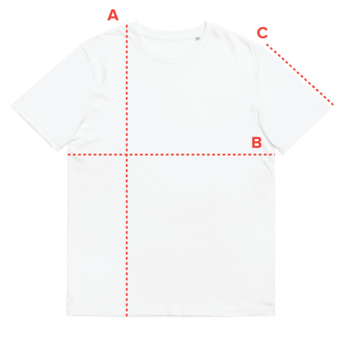
| Size Label | Length | Width | Sleeve length |
| S | 28 ⅜ | 19 ½ | 9 ¼ |
| M | 29 ⅛ | 21 | 9 ½ |
| L | 29 ⅞ | 22 ⅝ | 9 ⅝ |
| XL | 31 ⅛ | 24 ⅝ | 9 ⅞ |
| 2XL | 32 ⅛ | 26 ⅝ | 10 |
| 3XL | 33 ⅛ | 28 ½ | 10 ¼ |
| 4XL | 33 ⅞ | 30 ½ | 10 ¼ |
| 5XL | 34 ⅝ | 32 ½ | 10 ¼ |
Hoodie
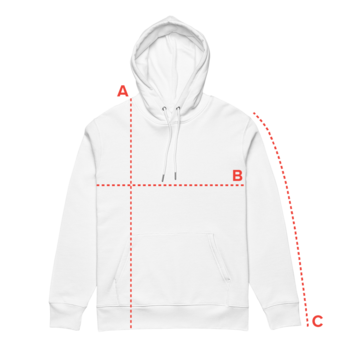
| Size Label | A | B | C |
| S | 28 | 21 ⅝ | 25 ⅜ |
| M | 28 ¾ | 23 ¼ | 25 ¾ |
| L | 29 ½ | 24 ¾ | 26 ⅛ |
| XL | 30 ¾ | 26 ¾ | 26 ⅝ |
| 2XL | 31 ¾ | 28 ¾ | 26 ¾ |
| 3XL | 32 ⅝ | 30 ¾ | 27 |
| 4XL | 33 ⅛ | 32 ⅝ | 27 ⅛ |
| 5XL | 34 ¼ | 34 ⅝ | 27 ⅜ |
Cropped Sweatshirt
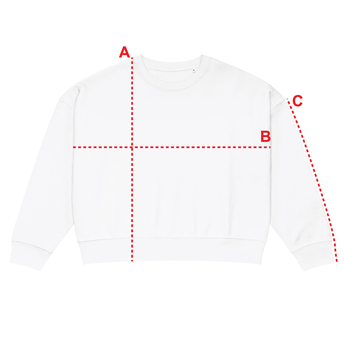
| Size Label | Length | Width | Sleeve Length |
| S | 22 ½ | 23 ⅝ | 18 ¼ |
| M | 23 ¼ | 24 ¾ | 18 ¼ |
| L | 24 | 26 ⅜ | 18 ¼ |
| XL | 24 ¾ | 28 ⅜ | 18 ¼ |
| 2XL | 25 ⅝ | 30 ¼ | 18 ¼ |
Sweatshirt
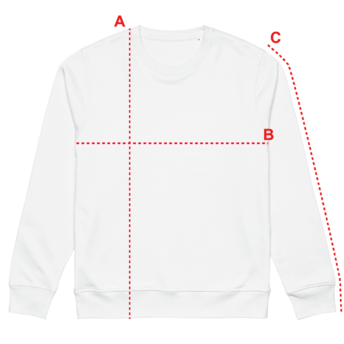
| Size Label | Length | Width | Sleeve Length |
| S | 27 ⅛ | 19 ¾ | 25 |
| M | 28 | 21 ¼ | 25 ¾ |
| L | 28 ¾ | 22 ⅞ | 26 ⅝ |
| XL | 29 ⅞ | 24 ¾ | 26 ¾ |
| 2XL | 30 ⅞ | 26 ¾ | 27 |
Bucket Hat

| Size Label | A | B | C |
| One size | 22 | 3 | 2 |
Baseball Hat

| Size Label | A | B | C | D |
| One size | 20 ½ - 23 ⅝ | 4 ⅜ | 2 ¾ | 7 ⅛ |
Large Tote Bag

| Size | A | B | C | D |
| One size | 14 | 20 | 25 | 1 |
Small Tote bag

| Size | A | B | C | D |
| One size | 14 ½ | 16 | 24 1/2 | 1 |
Tee
| Size Label | Length | Width | Sleeve length |
| S | 72 | 49.5 | 23.5 |
| M | 74 | 53.5 | 24 |
| L | 76 | 57.5 | 24.5 |
| XL | 79 | 62.5 | 25 |
| 2XL | 81.5 | 67.5 | 25.5 |
| 3XL | 84 | 72.5 | 26 |
| 4XL | 86 | 77.5 | 26 |
| 5XL | 88 | 82.5 | 26 |
Hoodie
| Size Label | A | B | C |
| S | 71 | 55 | 64.5 |
| M | 73 | 59 | 65.5 |
| L | 75 | 63 | 66.5 |
| XL | 78 | 68 | 67.5 |
| 2XL | 80.5 | 73 | 68 |
| 3XL | 83 | 78 | 68.5 |
| 4XL | 84 | 83 | 69 |
| 5XL | 87 | 88 | 69.5 |
Cropped Sweatshirt
| Size Label | Length | Width | Sleeve Length |
| S | 57 | 60 | 46.4 |
| M | 59 | 63 | 46.4 |
| L | 61 | 67 | 46.4 |
| XL | 63 | 72 | 46.4 |
| 2XL | 65 | 77 | 46.4 |
Sweatshirt
| Size Label | Length | Width | Sleeve Length |
| S | 69 | 50 | 63.5 |
| M | 71 | 54 | 65.5 |
| L | 73 | 58 | 67.5 |
| XL | 76 | 63 | 68 |
| 2XL | 78.5 | 68 | 68.5 |
Bucket Hat
| Size Label | A | B | C |
| One size | 56 | 7.6 | 5 |
Baseball Hat
| Size Label | A | B | C | D |
| One size | 52 - 60 | 11 | 7 | 18 |
Large Tote Bag
| Size | A | B | C | D |
| One size | 35.6 | 50.8 | 63.5 | 2.5 |
Small Tote bag
| Size | A | B | C | D |
| One size | 36.8 | 40.6 | 62.2 | 2.5 |
Size guide text
FAQs
Shipping + delivery
Returns + damaged items
Sizing + care
Production + profit
Where do you ship to?
The United States is our home market and most of our orders go there. We ship almost everywhere else too, with a small extra charge added at checkout to cover the longer journey. Customs and import fees are set by your country rather than by us, so we can't cover those.
How long does shipping take?
There are two parts to the wait. Your item gets printed after you order it, which takes two to five business days. Shipping then takes another three to four business days inside the US, or five to twenty business days everywhere else. A US order usually arrives about a week to a week and a half after you place it.
How much does shipping cost?
It depends on what you ordered and where you live, and the exact amount appears at checkout. We charge what our fulfillment partner charges us and we don’t mark it up. Sometimes an order ships from more than one location, which is why it can come out slightly higher.
We don't offer free shipping, for two reasons. A quarter of the gross profit on every city can design goes to that city's community garden. We also pay a meaningful share to the Collectives Creators who put these designs in front of people, which leaves our own margin thin and nothing spare to absorb postage with. The second reason is that we would rather be upfront about what a garment costs to move than fold it into the price and make it up elsewhere (by lowering the garment’s quality or cutting its sustainability practices).
Will my order arrive in separate parcels?
Occasionally, it will. Hats always travel on their own, because they can get crushed in a box with a folded tee. Items printed in different facilities also ship separately, and when that happens the packages can arrive a few days apart. Each one gets its own tracking link.
How do I track my order?
You'll get a tracking link by email as soon as your package leaves the print facility. If your order shipped in more than one package, you'll get a link for each.
What happens if my parcel is delayed?
Delivery windows are estimates and carriers have bad weeks. If your package is more than a few days past its estimate, email us at hello@wearecollectives.com with your order number and we'll chase the carrier. If it turns out to be genuinely lost, we'll reprint it or refund you, as long as you tell us within thirty days of the original delivery estimate.
Do I have to pay customs or import fees?
You might if you are outside the USA. Our fulfillment partner has all of our products available for fulfillment within the USA and only some of those products available for fulfillment within the EU and UK. If your order ships from a facility outside your country the amount varies by destination and order value, so we can't predict it or cover it. Our fulfillment partner routes every order to the facility nearest you.
Do you accept returns or exchanges?
We don't accept returns for a change of mind or for the wrong size. Your item is printed specifically for your order, so there's no warehouse to send it back to and no next customer waiting to buy it. Damaged and misprinted items are a different situation, and we'll always sort those out.
What if my item arrives damaged or misprinted?
We'll reprint it and send you a new one, or refund you, whichever you'd rather have. Email hello@wearecollectives.com within thirty days of delivery with your order number and a clear photo of the problem. You don't need to return the item to us.
What counts as a printing error or defect?
It covers a print that landed in the wrong place, or in the wrong colors, or on the wrong item as compared to that shown on the original order. It also covers a print that's cracked, warped or damaged, and any garment that arrives with a hole or a broken seam. What it doesn't cover is the small variation in color and placement that comes with printing things one at a time, which we go into further down this page. If you're not sure which one you're looking at, send us a photo and we'll take a look.
What if I ordered the wrong size?
We can't swap it, because the item was printed to order and there's nothing sitting on a shelf to swap it for. Please use the size guide on the product page before you order. If a garment turns out to be far off what the guide said, do tell us, because that means our guide may be wrong and we may need to fix it.
How long do refunds take?
We process refunds as soon as the claim is approved. After that it sits with your bank, which usually takes a few business days.
How do I choose my size?
Every product page has a size guide with the garment's actual measurements laid flat, in inches and centimeters. Measure a similar piece of clothing you already own and wear constantly, compare the chest and the length, then pick the size that matches. This works better than guessing from S, M and L, which mean different things on different blanks.
What if I'm between sizes?
Size up. Cotton shrinks slightly on the first wash. If you specifically want a fitted cut, size down and expect it to be snug.
How do I wash it so the print doesn't crack?
Wash it cold, inside out, on a gentle cycle. Ideally, hang it up to dry, or if you must, tumble dry on low. Skip the bleach and don't iron directly onto the print. The ink soaks into the fibers rather than sitting on top of them, so it holds up well, though hot water and a hot dryer will age it faster.
What does print on demand mean?
Nothing gets printed until somebody orders it. That means no warehouse of unsold tees getting discounted twice and then landfilled, which is where most of the waste in clothing actually happens. Your order is printed at the facility closest to your address and ships from there.
Why does production take a few days?
Your item doesn't exist yet when you order it. Printing it, letting it cure, checking it and packing it takes two to five business days, and then shipping starts. It's slower than ordering from a warehouse, and that's the trade-off for not having a warehouse.
Will the item look exactly like the photos?
It'll be close, but not identical. Each piece is printed individually, so placement can shift a little and colors can land a shade off. Your screen is also lying to you slightly, because no two displays render color the same way.
How do print placements work?
A print placement is simply where on the garment a design sits, whether that's across the front, on the back, or smaller over the chest. For each design, we choose the placements that suit that particular artwork, so what you see on the product page is the full set of options for that piece. Whatever you select is exactly how your piece is printed. If there's a placement you'd love to see that isn't listed, email us at hello@wearecollectives.com, we’re very open to your requests.
Can I change or cancel my order after placing it?
No, we can't. Orders go into production quickly and once printing has started there's nothing left to cancel. If you spot a mistake in your address, email us immediately and we'll try to catch it in time.
How does the garden money actually work?
Each of the six city can designs is tied to a named community garden in that city, and a quarter of the gross profit on that design goes to the garden it's named for.
Here's the math on a $45 sweatshirt not including shipping. Production and fulfillment take about $25, which leaves roughly $20 of gross profit. The garden's quarter of that is about $5. Our own quarter is exactly the same size. If a Collectives Creator sent you here, they take half of the gross profit, and that comes out of the three quarters that aren't the garden's. The garden's $5 stays $5 either way.
The other designs in the collection don't carry that quarter at the point of sale. What happens instead is that we share our year-end profits with the community gardens, a few other initiatives and some of the independent creators who help make all of this possible.
How do I become a Collectives Creator?
Collectives Creators are the people who put these designs in front of an audience, and they earn half the gross profit on the sales they bring in. That's money we're then not spending to advertise on tech platforms, which is deliberate. We'd rather commerce worked this way round, with the money going back to people and creators who already share what we're trying to do here.
Can I order a batch for my garden or my group?
Yes. If you're thinking about a large order, email hello@wearecollectives.com before you order rather than after, and we can look at a discount. It also helps us to know a large order is on its way.
Can't find what you're looking for? Send an email to hello@wearecollectives.com

Get in touch
Questions, issues and unsolicited ideas are all welcome. There's no chatbot here, just Grant. He definitely has way more typos than a bot, but he's much better company.